
Queen Elizabeth National Park
Queen Elizabeth National Park, Uganda – Wildlife Safaris, Tree-Climbing Lions and Kazinga Channel
Queen Elizabeth National Park is one of Uganda's most popular wildlife safari destinations, celebrated for its beautiful savannah landscapes, diverse wildlife, volcanic crater lakes and the famous tree-climbing lions of Ishasha. Located in western Uganda within the Albertine Rift Valley, the park offers an excellent combination of traditional African game drives, boat safaris, bird watching, scenic experiences and cultural attractions. Its varied habitats make it particularly appealing to travellers who want to see different wildlife species and enjoy several activities within one national park.
Covering approximately 1,978 square kilometres, Queen Elizabeth National Park stretches between Lake Edward and Lake George, with the Kazinga Channel forming one of its most important natural features. The park supports elephants, lions, leopards, buffaloes, hippos, crocodiles, numerous antelope species and an exceptional variety of birds. Visitors can explore the wildlife-rich Kasenyi Plains, search for tree-climbing lions in Ishasha, take a boat safari along the Kazinga Channel or discover the volcanic landscapes surrounding the crater lakes. At Kenzi Safaris, we organise Queen Elizabeth National Park safaris for travellers seeking memorable wildlife experiences, comfortable accommodation and opportunities to combine the park with gorilla trekking in Bwindi or chimpanzee tracking in Kibale.
About Queen Elizabeth National Park
Queen Elizabeth National Park was established in 1952 as Kazinga National Park and renamed in 1954 following the visit of Queen Elizabeth II to Uganda. Today, it is one of the country's best-known protected areas and an important destination for wildlife conservation and tourism. The park lies within the western branch of the East African Rift Valley, with landscapes that include open grasslands, acacia woodland, wetlands, tropical forest, volcanic crater lakes and the shores of Lake Edward and Lake George. On clear days, parts of the park offer beautiful views towards the Rwenzori Mountains, creating a dramatic backdrop for wildlife photography.
The park's ecological diversity is one of its greatest attractions. The Kasenyi Plains provide open grasslands that support grazing animals and predators, while the Ishasha sector in the south is known for its woodland savannah and tree-climbing lions. The Kazinga Channel supports large concentrations of hippos, crocodiles and water birds, and forested areas such as Kyambura Gorge and Maramagambo Forest provide habitat for primates and other wildlife. These contrasting environments allow visitors to experience different aspects of Uganda's natural heritage during a single safari.
Wildlife in Queen Elizabeth National Park
Queen Elizabeth National Park is one of Uganda's most diverse wildlife destinations, supporting a wide variety of mammals, birds and reptiles across its open savannah, acacia woodland, wetlands, crater lakes and forested landscapes. The park is particularly well known for its African elephants, buffaloes, lions, leopards, Uganda kob, waterbucks, bushbucks, warthogs and other wildlife species that can be encountered during guided game drives. The Kasenyi Plains are among the most rewarding areas for wildlife viewing, with large numbers of Uganda kob grazing across the grasslands and attracting predators such as lions. The southern Ishasha sector is famous for its unusual tree-climbing lions, which are sometimes observed resting in the branches of large fig trees. Although these sightings are not guaranteed, the opportunity to search for lions in the trees makes Ishasha one of the park's most distinctive wildlife attractions.
The Kazinga Channel provides another exceptional wildlife-viewing experience, particularly for visitors interested in observing animals along the water. This natural channel connecting Lake Edward and Lake George supports large populations of hippos, Nile crocodiles and numerous water birds, while elephants, buffaloes and other mammals frequently visit its shores to drink and feed. Boat safaris offer excellent opportunities to observe wildlife while enjoying views of the surrounding landscape. Queen Elizabeth National Park also protects primates in its forested habitats, including chimpanzees in Kyambura Gorge, as well as several monkey species. With its combination of traditional game drives, boat safaris, forest experiences and varied scenery, the park is an excellent destination for travellers looking to explore Uganda's wildlife beyond mountain gorilla trekking.
Game Drives in Queen Elizabeth National Park
Game drives are among the main activities in Queen Elizabeth National Park, allowing visitors to explore the open savannah and woodland habitats in search of wildlife. The Kasenyi Plains are particularly popular because their grasslands support Uganda kob, buffaloes, elephants and other animals, creating opportunities to encounter predators such as lions. Early morning game drives are often rewarding because temperatures are cooler and many animals are more active before the heat of the day. Visitors may see grazing antelopes, elephants moving through the grasslands or lions resting in areas where prey animals are present. Afternoon game drives provide another opportunity to explore the park, with softer light towards evening creating attractive conditions for landscape and wildlife photography.
The southern Ishasha sector offers a different game-drive experience, with its woodland savannah and scattered large trees providing suitable habitats for the area's famous tree-climbing lions. Game drives here focus on searching for lions resting in tree branches while also observing elephants, buffaloes, antelopes and other wildlife. The best viewing routes depend on animal movements, road conditions and the location of your accommodation. Travellers interested in photography may benefit from spending additional time in the park, as wildlife encounters are unpredictable and different drives can produce very different sightings.
Tree-Climbing Lions in Ishasha
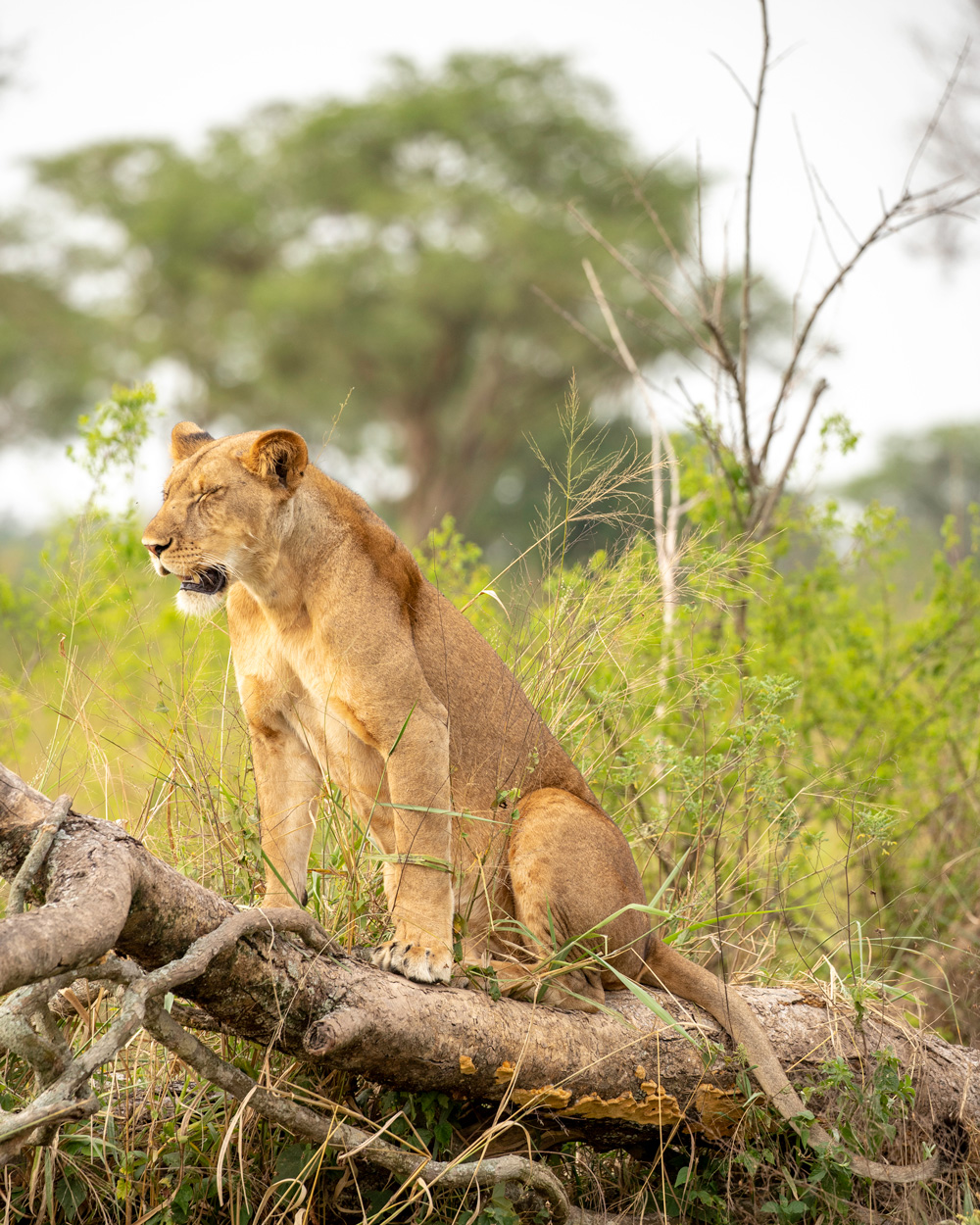
The tree-climbing lions of Ishasha are among Queen Elizabeth National Park's most famous attractions. Unlike the behaviour commonly associated with lions resting on the ground, some lions in Ishasha are regularly observed climbing into large trees, where they may spend considerable time resting among the branches. The behaviour is particularly associated with fig trees and other trees with branches capable of supporting the animals. Several explanations have been suggested, including avoiding biting insects, finding cooler resting places and gaining a better view of the surrounding area, although the reasons are not fully established.
Ishasha is located in the southern part of Queen Elizabeth National Park and is often included in itineraries travelling between the park and Bwindi Impenetrable National Park. Visitors explore the area on guided game drives, searching for lions while enjoying the surrounding savannah scenery. Tree-climbing lion sightings are not guaranteed because the animals move freely through their habitat, but the opportunity to observe this unusual behaviour makes Ishasha a worthwhile destination for wildlife enthusiasts and photographers.
Kazinga Channel Boat Safaris
A boat safari on the Kazinga Channel is one of the most rewarding activities in Queen Elizabeth National Park, offering a different perspective from traditional game drives. The channel is a natural waterway connecting Lake Edward and Lake George, and its shores attract a wide variety of wildlife throughout the year. During a boat trip, visitors may observe large groups of hippos resting in the water, Nile crocodiles basking along the shoreline and elephants or buffaloes gathering near the banks to drink. The relatively open views along the water can provide excellent opportunities for photography, particularly when animals are feeding or moving close to the shoreline.
The Kazinga Channel is also one of the park's most important birding habitats, supporting numerous water birds such as African fish eagles, kingfishers, herons, pelicans, cormorants and other species. Boat safaris are generally conducted with experienced guides who explain the wildlife, vegetation and ecological importance of the channel. The experience is suitable for travellers of different ages and is often included in two- or three-day Queen Elizabeth safari itineraries. Combining a morning game drive with an afternoon boat safari provides a particularly balanced way to explore the park's savannah and aquatic habitats.
Chimpanzee Tracking in Kyambura Gorge
Kyambura Gorge is one of Queen Elizabeth National Park's most distinctive natural features, containing a strip of riverine forest surrounded by savannah landscapes. The gorge provides habitat for chimpanzees, monkeys, birds and other forest wildlife, creating an interesting contrast with the open grasslands found elsewhere in the park. Guided chimpanzee tracking experiences may be arranged through authorised park activities, allowing visitors to descend into the gorge with ranger guides in search of chimpanzees. The walk involves forest terrain and can be physically demanding, depending on conditions and the location of the animals.
Chimpanzee sightings in Kyambura can be less predictable than in Kibale National Park because of differences in habitat and chimpanzee populations. However, the gorge remains an interesting destination for travellers who want to explore a forest ecosystem within Queen Elizabeth National Park. Even when chimpanzees are difficult to locate, the forest scenery, birdlife and other primates can make the experience worthwhile. Visitors whose main priority is chimpanzee tracking may prefer to combine Queen Elizabeth with Kibale National Park, while those with additional time can include Kyambura as part of a wider wildlife itinerary.
Crater Lakes and Lake Katwe
Queen Elizabeth National Park and the surrounding region contain beautiful volcanic crater lakes that provide some of western Uganda's most striking scenery. These landscapes were formed by past volcanic activity, leaving behind circular depressions that later filled with water or developed into other natural features. Scenic drives through selected crater lake areas allow visitors to appreciate the region's geological history, rolling hills and views across the Rift Valley. The crater lakes also create attractive settings for landscape photography and provide a quieter experience away from the main wildlife-viewing areas.
Lake Katwe is particularly well known for its long history of traditional salt extraction. Local communities have used the lake for salt production for generations, and organised visits can provide opportunities to learn about the techniques involved and the importance of the activity to local livelihoods. A visit to Lake Katwe adds a cultural and historical dimension to a Queen Elizabeth safari, helping travellers understand the relationship between local communities and the surrounding landscape.
Bird Watching in Queen Elizabeth National Park
Queen Elizabeth National Park is one of Uganda's leading bird watching destinations, with more than 600 recorded bird species across its varied habitats. The combination of savannah, woodland, wetlands, lakes and forested areas supports a remarkable diversity of birds, making the park suitable for both casual bird watchers and specialist birding enthusiasts. The Kazinga Channel is particularly rewarding for water birds, including African fish eagles, kingfishers, pelicans, herons and cormorants, while the Kasenyi Plains and Ishasha region provide opportunities to observe raptors, cranes, bee-eaters and other savannah species.
Bird watching can be enjoyed during game drives, boat safaris and dedicated excursions with knowledgeable guides. Early morning is often a productive time because many birds are active during the cooler hours, although different habitats may be rewarding throughout the day. Travellers with a particular interest in birdlife may prefer to spend additional time exploring the park's different ecosystems rather than concentrating only on the main wildlife attractions. Queen Elizabeth can also be combined with Kibale and Bwindi for a longer Uganda birding safari that includes both savannah and forest species.
Best Time to Visit Queen Elizabeth National Park
Queen Elizabeth National Park can be visited throughout the year, although rainfall and seasonal conditions influence wildlife viewing and road access. The relatively drier periods from June to September and December to February are generally popular for game drives because tracks are often easier to navigate and vegetation may be shorter in some areas. Wildlife can sometimes be easier to observe around water sources during drier conditions, although animal movements remain unpredictable. These months are also suitable for combining Queen Elizabeth with gorilla trekking in Bwindi and chimpanzee tracking in Kibale.
The wetter periods from March to May and October to November bring greener landscapes and increased rainfall. Some tracks may become muddy, but the park remains open, and wildlife activities continue subject to weather and operational conditions. Bird watching can be rewarding during different seasons, depending on the species and habitats being explored. Travellers should consider their preferred activities, accommodation availability and overall Uganda safari route when choosing travel dates.
Where to Stay in Queen Elizabeth National Park
Queen Elizabeth National Park offers accommodation ranging from comfortable mid-range lodges to luxury safari properties, with options located around Mweya, Kasenyi, Kyambura Gorge, Ishasha and neighbouring areas. Mweya Safari Lodge is one of the park's established accommodation options, known for its location overlooking the Kazinga Channel and surrounding landscapes. Kyambura Gorge Lodge provides a luxury accommodation experience near the gorge, while Ishasha Wilderness Camp is an option for travellers interested in exploring the southern sector and searching for tree-climbing lions.
The most suitable accommodation depends on the activities included in your itinerary. Travellers focusing on game drives in Kasenyi and boat safaris on the Kazinga Channel may prefer accommodation near the northern and central areas of the park, while those spending time in Ishasha may benefit from staying closer to the southern sector. Choosing a well-positioned lodge can reduce unnecessary driving and allow more time for wildlife viewing. Kenzi Safaris can help recommend accommodation according to your budget, preferred comfort level and travel route.
How to Get to Queen Elizabeth National Park
Queen Elizabeth National Park is located in western Uganda and can be reached by road from Kampala or Entebbe, with the journey generally taking approximately six to eight hours depending on the route, traffic and accommodation location. The drive passes through beautiful countryside and towns, with opportunities to appreciate Uganda's changing landscapes. The park is also conveniently connected to other western Uganda destinations, including Kibale National Park to the north and Bwindi Impenetrable National Park to the south, making it an important stop on longer wildlife and primate safari itineraries.
Domestic flights may be available to selected airstrips serving the Queen Elizabeth region, followed by road transfers to accommodation and activity areas. Travellers planning to visit both the northern section and Ishasha should allow sufficient time because the park covers a large area. A carefully planned itinerary can combine game drives, a Kazinga Channel boat safari, scenic experiences and onward travel to Bwindi without unnecessary backtracking.
Frequently Asked Questions About Queen Elizabeth National Park
Where is Queen Elizabeth National Park located? The park is located in western Uganda within the Albertine Rift Valley, between Lake Edward and Lake George.
What is Queen Elizabeth National Park famous for? It is known for wildlife game drives, tree-climbing lions in Ishasha, Kazinga Channel boat safaris, crater lakes and bird watching.
Can I see lions in Queen Elizabeth National Park? Yes. Lions inhabit the park, particularly in areas such as Kasenyi and Ishasha, although sightings cannot be guaranteed.
Where can I see tree-climbing lions? The Ishasha sector in southern Queen Elizabeth is the best-known area for searching for tree-climbing lions.
Is the Kazinga Channel boat safari worth doing? Yes. It is one of the park's most rewarding activities, offering opportunities to observe hippos, crocodiles, elephants, buffaloes and numerous water birds.
How many days should I spend in Queen Elizabeth National Park? Two to three days is a good starting point, while longer stays allow additional wildlife activities and time in Ishasha.
Can Queen Elizabeth be combined with gorilla trekking? Yes. The park is commonly combined with Bwindi Impenetrable National Park on Uganda wildlife and gorilla trekking safaris.
EXCLUSIVE SAFARI PACKAGES
Related Uganda Journeys